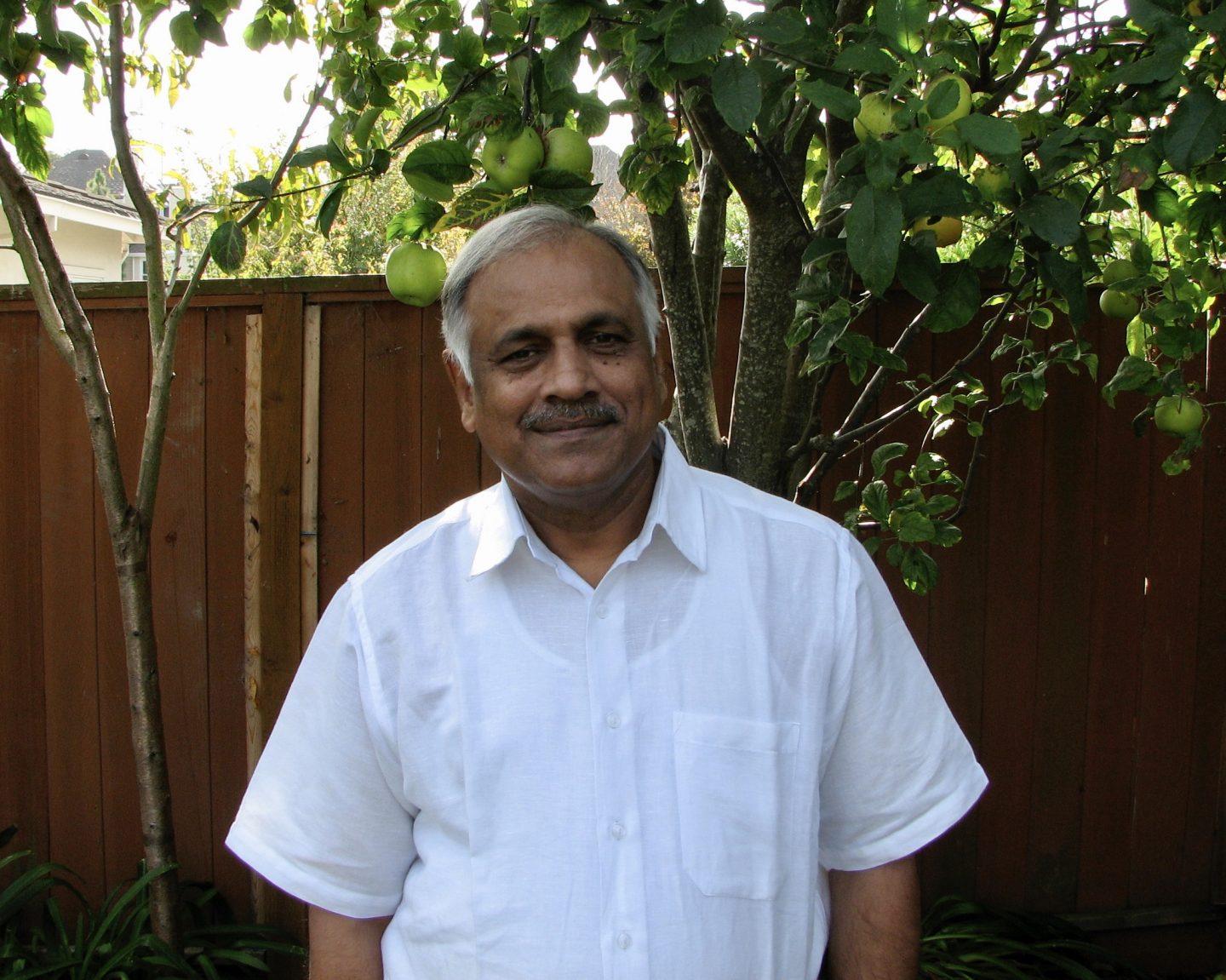
We respectfully invite you to leave your thoughts and remembrances about Late Sri C. S. Rao in the comments section below. Your perspectives will help us celebrate his life.
——————————————————————-
Posted by: Dr. Y.V. Reddy [former Governor, Reserve Bank of India]
When C S Rao’s tenure as Chairman of Insurance Regulatory Development Authority of India (IRDAI) came to an end in 2008 and the search for a successor was underway, Mr. P Chidambaram, the Finance Minister at the time asked me, ‘Can we find someone like C S Rao?’ C S Rao was a role model, wherever he was.
How did his career at the IRDAI start? Mr. Jaswant Singh, the Finance Minister in the NDA government asked what C S Rao’s post-retirement plans were. C S Rao, at the time, was his Secretary, Revenue. He replied that he was keen to return to Hyderabad and settle there quietly. The Minister urged him to accept the position. Mr. C S Rao did not seek: he was sought after.
There’s a little bit of a story behind how C S Rao became Secretary, Revenue. Prior to that he was serving as Secretary, Expenditure. I was personally aware of his expertise in State and Central finances, but his shift to Revenue came unexpectedly. The Finance Minister was keen that he move to Revenue since he wanted “someone with impeccable integrity and professional excellence”. Mr. C S Rao commanded trust.
How he became Adviser (Finance) to Chief Minister of Andhra Pradesh is also interesting. As soon as he received the call from the Chief Minister, persuading him to join as Adviser (Finance) with a Cabinet rank, C S Rao called me because he was reluctant to accept. I explained to him that he should take up the offer as it would be helpful to the State. It was not only in the interest of the State, but I had a selfish interest. He had the credibility and capacity to smoothen out the conflicting points of view between Andhra Pradesh, Telengana and Government of India. C S Rao was held in high esteem.
His professional achievements are too well known for me to go into them in greater detail. At a personal level, there is not much more to say than what was widely said about him when he was Finance Secretary: that one comes out of his office after hearing a ‘no’ and yet feels happy, while with most other Finance Secretaries one comes out of their offices feeling unhappy after hearing a ‘yes’!
His very presence was benign. He used to carry dignity with himself. Goodness in thought, talk, and action were so natural to him, it was easy to take them for granted.
I recall my association with him with pleasant memories of mutual affection and professional interaction.
—
Posted by: Mohan Kanda (Former Chief Secretary, Andhra Pradesh; former Secretary, Ministry of Agriculture, Govt. of India)
I first met C. S. Rao at Hyderabad at a lunch organised for the trainee Assistant Collectors of the 1968 batch of the IAS ( of whom I was one), by the Collector of Hyderabad. Our batch was on a visit to the state capital training in the (then) Board of Revenue. CS was under training in that district at that time. I remember having been struck by his sharp good looks and friendly disposition.
I had the pleasure of working side-by-side with CS on many occasions. Our relationship was perhaps its closest when I was the planning secretary of the state and he the Secretary Finance. Having never worked in finance before (or afterwards for that matter), I remember my horror as, under pressure from the acute shortage of funds towards the end of the financial year, CS mercilessly struck out program after program from the proposals I had carried to him. But such was the sweetness of his manner, and the warmth of his smile, that I came back with a beatific smile, in spite of the hammering my proposals had received!
Among the many important and crucial responsibilities he handled during his service service, his stint as collector of Krishna district during the 1977 cyclone and tidal wave that ravaged the coastal areas where of Andhra Pradesh, will perhaps remain as the most trying period he went through. It was a harrowing experience! With the unprecedented calamity having left thousands of people dead and razed to the ground dozens of villages in a matter of a few hours. And the politics, dirty and debased , that followed in its aftermath were a greater tragedy. It is a tribute to the upright character, absolute equanimity in the face of acute adversity and unswerving dedication to duty, that he not only survived but surmounted the challenges posed by that situation but also had praise showered on him by all quarters.
After that, it was towards the end of our careers, when I was in Additional Secretary in the Ministry of Agriculture and he was the Additional Secretary, Ministry of Food & Civil Supplies, that we had to opportunity to spend a lot of time together. I frequently sought, and was readily given, his wise counsel when in doubt.
CS was a classical example of a quintessential civil servant, straightforward and hard-working with the welfare of the public always uppermost in his mind.
He was one if the most wonderful human beings I have ever known, kind, considerate and helpful. There is no organisation in which he served where people do not recollect his tenure with gratitude and affection.
—
Posted by: Dr. Duvvuri Subbarao [Former Governor, Reserve Bank of India; Former Finance Secretary, Govt. of India]
CS Rao – A Quintessential Ajathasatru
It was a late July evening in 1974 some two weeks after I had assumed office as Sub Collector, Parvathipuram, then in Srikakulam District – my first IAS posting. I finished the day’s work that required a public interface and was settling into a bureaucrat’s defining task – clearing files. Just then it started raining, soon there was thunder, and sure enough the power had gone off. As I was contemplating my next move, someone walked into my office, and even in that eerie setting, I could see, rather sense, his affable demeanour and disarming simplicity.
He introduced himself. We talked by a flickering candlelight; a little later waded through ankle deep water to my ‘bungalow’, less than a hundred meters away, talked even more over a simple vegetarian meal and finally retired for the night on cots in the open veranda of the crumbling, but still elegant, Sub-Collector’s bungalow. It was our first meeting but it felt like we had known each other for ever. That was CS Rao – affable, gentle, friendly, genuine, and most of all, generous.
Tribal Development – A Pioneer
He was then Project Officer, GDA (Girijan Development Agency) – a pilot project launched by Government of India in select districts – with headquarters in Srikakulam. He would come to Parvathipuram often, and we would travel together to tribal villages and agency tracts, oftentimes for several days on each trip.
The Parvathipuram Agency tract was the epicentre of the Naxalite movement in the early 1970s – a reaction, it was quite clear, to the ruthless exploitation of tribals by plains people for centuries. Weaning tribal people away from the extremist influence by providing them livelihood, security and opportunity was the crux of the tribal development initiative, and CS Rao was the man chosen to lead the effort. And lead he did, with deep thought, untiring effort, understated style and exemplary commitment. Watching him interact with tribals with that trademark empathy and sincerity was a lifelong lesson for me, not in just tribal development but in public administration.
It was common for us then to have official teams from across the country visiting us – all despatched by Government of India – to study and learn from the Srikakulam experience of tribal development – a testimonial to CS Rao’s lifelong credo of having results rather than words speak for his work.
Disaster Relief – Unparalleled Expertise
CS Rao was Collector of Krishna District when the devastating tidal wave hit the Diviseema coast in November 1977, causing colossal death and destruction, plunging tens of thousands of families into tragedy and grief. Back then, communication systems were antiquated, relief and rehabilitation facilities scanty and standard operating procedures for disaster relief virtually non-existent. Undaunted, CS Rao led from the front to launch a mammoth relief and rehabilitation effort – clearing dead bodies, reaching food and medicines to marooned villages, providing shelter to the uprooted, and most of all, just being there to listen to people vent their pain, anguish and anger. Urmila, who I would marry a year later, was then Sub Collector Vijayawada and part of CS Rao’s innermost team. Even today, over forty years down the line, she has enduring memories of those stressful times and the fortitude, determination and commitment shown by CS Rao in extremely testing circumstances. In a very rare and prized recognition, the Time magazine profiled him as the promising face of Indian bureaucracy. We were all proud, and may I admit, even a tad envious.
Like in tribal development, in disaster relief too, CS Rao was a pioneer, and if this were the academia, his work would constitute the basic textbook for a graduate level course. Not surprising then that he was on the World Bank’s roster of world’s leading experts on disaster relief. Years later when I was a staff member in the World Bank, I got to learn firsthand of the respect he had earned for his expertise on disaster relief which served countries around the world.
A Quintessential Finance Man
Even as his work in every job he held was highly regarded, it is as the quintessential Finance Secretary that virtually all his colleagues remember him. In some sense, he defined the job, and the job defined him. Remarkably, he spent 24 of his 36 years in service in Finance Ministry postings, a unique distinction in an IAS career where flitting from one job to another and one department to another is the norm. Given that governments in states and in Delhi post some of their best officers in Finance jobs, that CS Rao had such an extended stint in Finance was recognition of his exceptional personal and professional traits.
Having been a Finance Secretary myself, both in Andhra Pradesh and in Delhi, I know from personal experience that it is a challenging job, but so are many others. There is one occupational hazard to a finance job though that is somewhat unique – having to say ‘no’ most of the time. Ministers and colleagues approach the Finance Secretary with projects and initiatives to seek funding. Charged as you are with balancing the government’s books, saying ‘no’ becomes unavoidable, no matter your inclination to be positive. But how you say ‘no’ makes a difference.
A colleague once said to me: “All of you in the Finance Department are so unhelpful and unfriendly. We have to plead with you like supplicants. You act so high and mighty. At the end of all that, we are so frustrated, vexed and annoyed that even if you say ‘yes’, we still go out of your office with a frown. Learn from CS Rao. Even when he says ‘no’, we come out with a smile.” That comment about sums up CS Rao – his equanimity, professionalism and respect for others.
Reliving Old Times
CS Rao was specially picked by then Finance Minister Jaswant Singh to head IRDAI in Hyderabad soon after he retired in 2003. I relocated to Delhi around then and later on became Finance Secretary in Government of India. He would often visit me as he did in our early careers in Srikakulam District. We used to talk business when he would bounce his ideas off me and discuss his initiatives. Most of the time we just talked, in a repeat of what we used to do in earlier times.
An Epitome of Ajathasatru
Over the years I had known him, I was deeply impressed by the way CS Rao privileged substance over style, results over ideologies and walking over talking. If there is anyone who fits the epitome of Ajathasatru, it has to be him. Looking back, I realize that he was a role model for me, not so much because I made a conscious decision to emulate him, but through an unconscious process of osmosis. It is my privilege to have known this officer and gentleman and I carry very endearing memories of my association with him.
Five People I will meet in Heaven
In 2004, Mitch Albom wrote a book, The Five People You Meet in Heaven, a wonderfully moving fable that addresses the meaning of life, and life after death, in the same poignant way that made his earlier book, Tuesdays with Morrie, such a touching story. The book’s protagonist is Eddie, an elderly amusement park maintenance worker who, while operating a ride called the ‘Free Fall’, dies while trying to save a young girl who gets in the way of a falling cart that hurtles to earth. Eddie goes to heaven, where he meets five people who were unexpectedly instrumental in some way in his life. While each guide takes him through heaven, Eddie learns a little bit more about what his time on earth meant, what he was supposed to have learned, and what his true purpose on earth was.
Whether or not I go to heaven when my time comes, CS Rao is sure to be on my list of five people I want to meet in the afterlife.
Meanwhile I pray that his soul rests in peace and God gives his family the fortitude and equanimity to adjust to this loss. They have, I am sure, very happy and fulfilling memories to remember this genuine, affectionate and wonderful human being.
—
Posted by: Sri V. Bhaskar [Former Chairman, Andhra Pradesh Electricity Regulatory Commission; Former Sp. Chief Secretary, Andhra Pradesh]
CS Rao- the Gentle Giant
Dear Sriram,
My condolences to you and your family on the passing of your father- a much respected and distinguished member of the IAS fraternity not only in ( erstwhile) Andhra Pradesh but also in the entire country. I was fifteen years his junior at work. I never had an opportunity to work for him. Despite this, I was influenced if not inspired by his reputation for probity and steadfastness, his understated but unflinching commitment, and soft but uncompromising demeanour.
He was truly a Gentle Giant – willing to speak truth to power, and uniquely-gently. The only time when I worked closely with him was nearly twenty five years ago. He was Finance Secretary and I was managing the Hyderabad Metro Water Board. The city then (as now) was bursting at the seams. It faced a water deficit. Drinking water was being supplied on alternate days. There was a clamour for more. We were constantly petitioning Government to release additional grants for tapping the Krishna river. This has since been done, but then, as at any time, there was a funds constraint. The government of the day saw itself more as a private sector facilitator rather than a public goods provider. The World Bank was whispering in its ear. We were urged to address our funding constraint by privatising the project.
Consequently, there was tremendous pressure to hand over the scheme for Krishna water extraction and purification to the private sector. Having been exposed to horror stories of water privatisation in several South American countries, I was extremely reluctant to proceed. My so-called uncompromising stance was seen with disfavour by the powers that be.
But CS Rao was far more savvy. He prodded me to embrace the proposal so that it could be closely scrutinised in the Hyderabadi rather than the Colombian environment. So, we did. We called for global tenders, scrutinised them and shortlisted a Malaysian company. Their representatives came to Hyderabad. We spent a month negotiating with them. They finally agreed to supply us water from the Krishna river at * 70 per kilolitre. We computed that if we did theproject ourselves, the cost would be only about * 30. It was then that the Gentle Giant took over and convinced the powers that be, that the proposed privatisation was an unnecessarily wasteful project, which would have long term deleterious consequences to not only to all the citizens of Hyderabad but also the Government of the day. We had spent a lot of time, money and effort on these fruitless negotiations. But we lived to fight another day.
CS Rao showed us neophytes that the practice of good public policy may initially require deliberately embarking on a wrong path and letting its outcomes conclusively demonstrate its ineffectiveness. Only then can you effectively advocate the “correct“ path. And the time, resources and manpower spent in the process are necessary externalities, even if “wasted” in the short term. The initially complex design of the Goods and Service Tax and the presently ongoing simplification efforts feel like déjà vu, but sadly, they do not seem to be accompanied by a CS Rao like direction as to what is the correct path!
I am guessing “ The Game of Thrones” was not a TV series he would have watched. Maybe he did. Either way, I am sure he would have had a great deal to say on its assertions that truth , honour and dignity need not necessarily triumph in this world. If the throne is to be won, it postulates, the struggle needs to be salted with flexibility, cunning, and guile. In real life, the bad guys do win many times. It can be stupid to be good. While such a moral framework may be relevant for many in today’s shadowy world (including those eminences in government diligently climbing the greasy pole), it certainly was not true for C.S Rao. For him truth, honour and dignity mattered, and he did stick with them throughout his remarkable and illustrious career. He proved that it was not stupid to be good. Truly an outlier!
Warm regards
(V Bhaskar)
Hyderabad 12 January 2019
—
Posted by: Dr. M.V.R. Prasad [IRS (retd.), Former Member of the Income Tax Appellate Tribunal]
CS, as I could call him, even though, at some stage, he was my boss, is a gentleman par excellence. He was essentially a gentle soul. He was totally unassuming in spite of the very high positions he held in Govt, both at the Centre and the State.
J Krishnamurti once told his audience to tread softly on earth. I can’t think of any other bureaucrat who trod more softly than CS. He had clarity of thinking which enabled him to go straight to the root of any problem. He had also a simple, clear expression which must have been derived from his English teacher parent. Freedom from prejudice and positive attitude were his hallmarks. He was far from being opinionated and so was a good listener. It is popularly known that, as a bureaucrat, he maintained strict neutrality and kept himself away from any camp. He wasn’t a usual climber of the ladder even though he reached the top.
In 1965, four of us, all Andhras, were lecturers in English in S V College, New Delhi: CS, C Ramakrishna, DR V P Rao of Penguin fame and I. Actually, it was CS who first informed me about my selection for the post as he was already working there and so had access to the Principal. Three of us took Civil Services Exam and all three of us, in 1966, got into Central Services: Ramakrishna into IRTS and CS and I into Income tax. During our stay in S V College, on one occasion, CS exhibited rare courage. Exams were going on and a senior lecturer was on invigilation duty. He found a big sized, notorious boy copying, with a knife before him on the table. He thought it prudent not to disturb the boy. When CS peered into the room casually, the Senior asked him to substitute for him for a few minutes and went out. CS noticed the same copying process and the threatening scene. Undeterred, he went to the boy, caught hold of the knife and led the boy to the Principal and the candidate was suspended. For a few days, we were apprehensive of retaliation, but luckily, nothing happened.
We had a short stint in L B Academy, Mussoorie. After that, CS was initially with us in the IRS training College where he was very popular with the co-probationers. One evening, I got involved in an escapade and ran to him for succour and advice which, needless to say, were readily available. Subsequently, even when he was in the College, he got into IAS and, thereafter, his popularity increased manifold, specially, with lady probationers. Not that he wanted it, but being an eligible bachelor, he could not escape it. He was truly a prince charming in the College. He helped me even in unorthodox ways to clear the Departmental exams. Luckily for him, because of his IAS, he was free of them. He said it would be a “sin” to carry them forward out of the College. I signed the security bond for him which he was required to give to Govt in the context of his IAS.
My mother was a regular visitor to Chilakalapudi Panduranga temple near Masulipatam. In the seventies, when Endowments Dept sought to take it over, my mother approached CS who entertained her request and intervened on behalf of the temple but I don’t remember to what effect. When he was Irrigation Secretary in the State, he helped my brother to collect some bills pending with the same Department.
In 1983, I was in North Block in search of the concerned Authority to give me permission to obtain some foreign exchange from RBI. Suddenly, I saw a name plate with “C S Rao” on it. Without much hope, casually, I peered in. There he was my old friend. To my luck, he was the concerned Authority. I got coffee and the requisite permission.
In 1994, I found myself stranded in Bombay without any accommodation. My seniority and claim for Govt Accommodation were being repeatedly disregarded by the Central PWD, apparently because of recommendation letters obtained by other claimants in the list. All my other resources failed and, then, a word from CS to late Sri P V R K Prasad, then with PM Secretariat, did the trick for me.
We used to meet in KBR park where he came usually in the company of Sriram. When Sriram went jogging, leaving us oldies behind, I could discuss, among others, even income tax problems with him. Being a distinguished generalist, he could clarify even specialized issues thrown at him. On occasions, he was fondly remembering his grandchild in America.
After his retirement from all roles, it appears, he was reading, true to his Chellapilla linege, Hindu scriptures and Telugu classics.
When late Dr V P Rao, our old colleague, visited Hyderabad, CS gave a party. He maintained his old bonds.
My last meeting with him was when he sent Sriram in his car for me to go to his residence. It was sad to see him with oxygen. Even then, he gave me a drink.
All in all, CS was a wonderful friend: gentle, unassuming and, at the same time, very distinguished. It is an honour and privilege to be able to call him a friend.
It was said of Caesar: “Here was a Caesar! When comes such another?” I would substitute CS for Caesar.
It was said of Hamlet: “Now cracks a noble heart. Good night, sweet prince, and flights of angels sing thee to thy rest!” I would say in the same vein of CS.


Homage to Shri C S Rao
I had the opportunity and privilege of only two interactions (though I wish I had many more) with late Shri C S Rao, and both left an indelible impression on me about the man and his gentle persona.
The first was when he was requested by the Court of Governors of the Administrative Staff College of India (ASCI), where I worked, to conduct a mid-term review of the Centre for Innovations in Public Systems. CIPS was a specialized Centre established in 2010 by the GOI at ASCI, to nurture and promote innovations in governance. Shri Rao wanted to have a briefing from me, since I was its founder Director for about one year plus, before I handed over the charge to Shri Chakrapani. That was the first time I met him one-on-one, though I had seen him and heard him in the CoG meetings, which I used to attend as an invitee, in my capacity as Dean. When he spoke, members listened to him in rapt attention. He was always clear, crisp, courteous and cogent in his communication.
My meeting with Shri Rao was a pleasant conversation. He was amiable and affable. For his stature and standing, he struck me as a personification of simplicity, modesty and humility. He was very kind and easy to talk to. He was a good listener, a quality of true leaders. In the end, he asked me several questions and made some balanced observations which were very pertinent and insightful. I was in awe of his grasp of the matter, though he had just had a perfunctory and fleeting glance of the papers before him. It was a great learning experience for me. Building on the good work of Shri Chakrapani, I later had the benefit of drawing upon the valuable suggestions Shri Rao made in his Report; and, implementing his recommendations, in my second stint as Director of CIPS.
My second interaction with Shri Rao was over phone. I had a long meeting with the Chairman AICTE in Delhi on a new PGDM (MBA) program that ASCI wanted to launch and there was some information sought, which had policy implications, on which, at my level, I could not take a call. I picked up the phone and spoke to Shri S M Datta, the then Chairman (CoG) of ASCI and he suggested I speak to Shri C S Rao and go by his advice. And, so I did, starting my conversation with an apology for disturbing him. Shri Rao, as was his wont, was very kind, listened patiently for the 15 minutes or so I spoke and gave his views and counsel, which as always, were very meaningful and helpful.
In my fifteen years of service at ASCI (2002-2017), I had had the occasion to meet and interact with a few hundreds of civil servants and Shri Rao, in my view, belonged to that rare breed of scholarly, much-respected, unassuming, good-natured, well-meaning, soft-spoken officers, who qualify and hence were looked up to, as ‘true friend, philosopher and guide’!
May his life and times be an inspiration to many like me!
Chandrasekhar Mylavarapu
Director
Indian Institute of Management Visakhapatnam
LikeLike
I worked with late CSRao Garu as as Deputy Secretary (Tech) when he was Prl Secretary I&CAD, GoAP during 1997-98.
He made me to learn lot things in administration, resolving critical issues by peer sharing, and closely move with senior bureaucrats towards enhancing individual’s capabilities. I happened to meet him along with Prof CRRao, his elder brother during 2015. He is that simple of remembering people with whom he associated and shared his affection & affinity.
I am here with paying my tributes to such a towering personality and walking encyclopedia.
Regards,
Dr ISNRaju
LikeLike